
Global Shifts: Supply Chains, Security, and the Battle for Information
OFF The World Magazine #392

🌏 ASEAN Survey: Waning Trust in US Leadership
The State of Southeast Asia 2026 survey shows a clear decline in regional confidence in US leadership. For the first time, ASEAN respondents identified US policy unpredictability—not China’s actions in the South China Sea—as their top concern. Trade tensions, tariffs, sanctions, and doubts about long‑term US commitments all contributed to the shift. In a forced choice between the US and China, slightly more respondents leaned toward China, reversing last year’s result, though not signaling a strategic realignment. Trust in the US as a defender of free trade and the rules‑based order also fell, while ASEAN and the EU gained relevance. Still, the US remains a key security partner for states like the Philippines, Timor‑Leste, Cambodia, and Brunei. The region now seeks greater stability, predictability, and consistent engagement.
⚠️ Lebanon–Israel: Evacuations Amid Ongoing Strikes
As Lebanon and Israel discuss a possible ceasefire, airstrikes continue and more than a million people have been displaced by rapid, often chaotic evacuation orders. During the latest escalation, Hezbollah attacked Israel, prompting the Israeli military to issue warnings—frequently via social media—to residents of southern Lebanon. Human rights groups argue the alerts are vague, trigger panic, and sometimes give only minutes to flee. Roads clog, shelters overflow, and many people learn about evacuations late through relatives or online posts. Legal experts warn that such mass movements may violate humanitarian law and amount to forced displacement. Israel states the warnings aim to protect civilians and target Hezbollah, but Lebanon’s limited evacuation infrastructure and weak alert systems deepen the crisis.
🧬 Scientists Identify a “Death Trail” Left by Dying Cells
Researchers at La Trobe University have discovered a previously unknown element of cell death: tiny vesicles called F‑ApoEVs that act as “death trails.” Published in Nature Communications, the study shows that dying cells release these vesicles to guide immune cells to sites where debris must be cleared. But the mechanism has a darker side—viruses such as influenza can hide inside these vesicles and use them to spread within the body. The findings reveal that cell death is a highly organized process and that intercellular communication continues even after a cell dies. Understanding this system may lead to new therapies for infections and autoimmune diseases, where efficient removal of dead cells is crucial.
🇭🇺 Hungary: Scientists Hope for Academic Renewal After Election Shift
The electoral defeat of Viktor Orbán after 16 years has raised hopes among researchers for restoring academic independence in Hungary. Opposition leader Péter Magyar has pledged to rebuild checks and balances and repair relations with the EU, potentially reopening access to major European research programs. Under Orbán, universities lost autonomy and scientific institutions were reorganized, contributing to the freezing of roughly €6.3 billion in EU funds. Scholars say the system has been weakened by politicization and declining international trust. While the opposition victory offers a chance for reform, experts caution that rebuilding the research ecosystem will require more than reversing laws—it demands stability, transparency, and renewed global partnerships. Rejoining EU programs may take time, and restoring academic trust will be an even longer process.
👩🦰 Central American Women in Exile Face Precarity and Resistance
Thousands of women from Nicaragua, El Salvador, and Guatemala now live in exile—not as economic migrants but as victims of political repression. Journalists, activists, lawyers, and community leaders are forced to flee, losing careers, families, and legal stability. In host countries such as Costa Rica, the US, and Spain, they face poverty, discrimination, caregiving burdens, and asylum waits exceeding 1,000 days. Indigenous women and LGBTIQ+ individuals are especially vulnerable, experiencing layered forms of violence. Despite this, new support networks are emerging, including the Regional Network of Exiled Women, which transforms displacement into political action and cross‑border solidarity.
🚆 Nacala Corridor: A New Model for Africa’s Mineral Supply Chains
The Nacala Corridor linking Malawi, Mozambique, and Zambia shows how integrated supply chains can expand access to critical minerals like lithium and cobalt while supporting African economic development. Rising global demand exposes long‑standing problems: political instability, corruption, weak institutions, and illegal trade. The old “extract and export” model drains billions from African economies due to minimal local processing and illicit financial flows. Supported by Japan and the African Development Bank, the Nacala project connects transport infrastructure with full‑chain development—from mining to processing and logistics. Transparency, co‑ownership, traceability, and environmental standards are central. The corridor boosts investment, facilitates regional trade, and enables value‑added processing in Africa, helping diversify global supply chains and build more resilient, equitable economic systems.
🧊 Argentina Eases Glacier Protections, Sparking Water Security Fears
Argentina’s Congress has approved a controversial reform of the 2010 Glacier Law, which previously banned mining in glacier and periglacial zones to protect vital water reserves. The amendment shifts authority from the scientific institute IANIGLA to provincial governments, allowing more discretion over which areas remain protected. Supporters argue it gives provinces control over their resources and enables mining “where there is nothing to protect.” Critics warn the change threatens water security, especially in arid regions dependent on meltwater. Environmental groups stress that all glaciers and periglacial environments act as natural reservoirs. The reform has triggered protests and deepened tensions between economic development advocates and defenders of water resources.
🛍️ RedNote Struggles to Break Into the US Social Media Market
RedNote (Xiaohongshu) is attempting to expand into the US through new offices, hiring, campus promotions, and its cross‑border shopping platform RedShop. Despite early interest from users leaving TikTok, engagement in the US quickly declined. The app remains dominated by Chinese‑language communities, with limited English‑language content. Analysts highlight major obstacles: a saturated market led by TikTok and Instagram, high promotional costs, and political concerns over privacy and censorship. Although RedNote has over 300 million global users and a strong ad‑plus‑e‑commerce model, its prospects in the US remain uncertain.
📰 New Zealand’s Local News Crisis Deepens as 14 Papers Close
The closure of 14 community newspapers by New Zealand Media and Entertainment accelerates the spread of “news deserts.” More communities are losing their only source of verified local reporting, a trend linked to social isolation, weaker civic oversight, and declining local identity. Many century‑old titles have vanished, while surviving papers operate with minimal resources. Social media fills the gap with unmoderated, often unreliable content. Local newspapers once shaped debates, amplified community concerns, and trained new journalists. Digital ventures like Crux also face financial strain. With more closures looming, pressure is growing on government and local councils to strengthen support for local journalism before the information landscape deteriorates further.
🏺 42,000 Ancient Ostraca Reveal Daily Life in Athribis
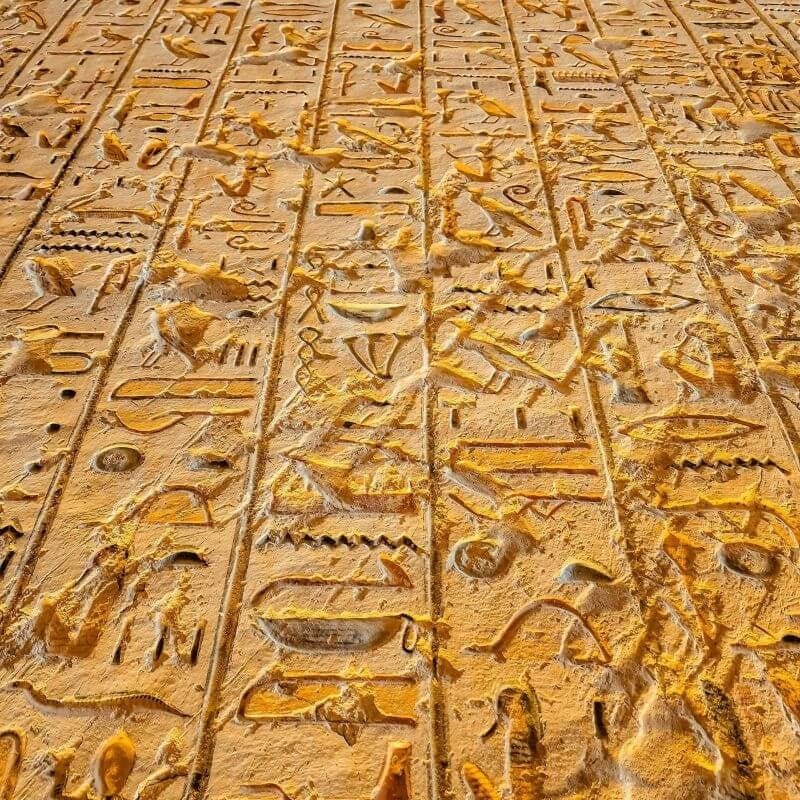
Analysis of more than 42,000 pottery fragments from Athribis in Egypt offers a rare window into everyday life up to 2,000 years ago. Used as writing material before paper, the ostraca contain notes, letters, receipts, school exercises, tax lists, religious texts, and even animal‑quality records. Most inscriptions are in Demotic and Greek, with others in additional scripts. The site, a major cult center of the goddess Repit, yielded a massive deposit discovered in 2018. Researchers also found drawings, geometric patterns, and horoscopes. The collection provides an exceptional source for understanding the routines, economy, and culture of ordinary people in ancient Egypt.